

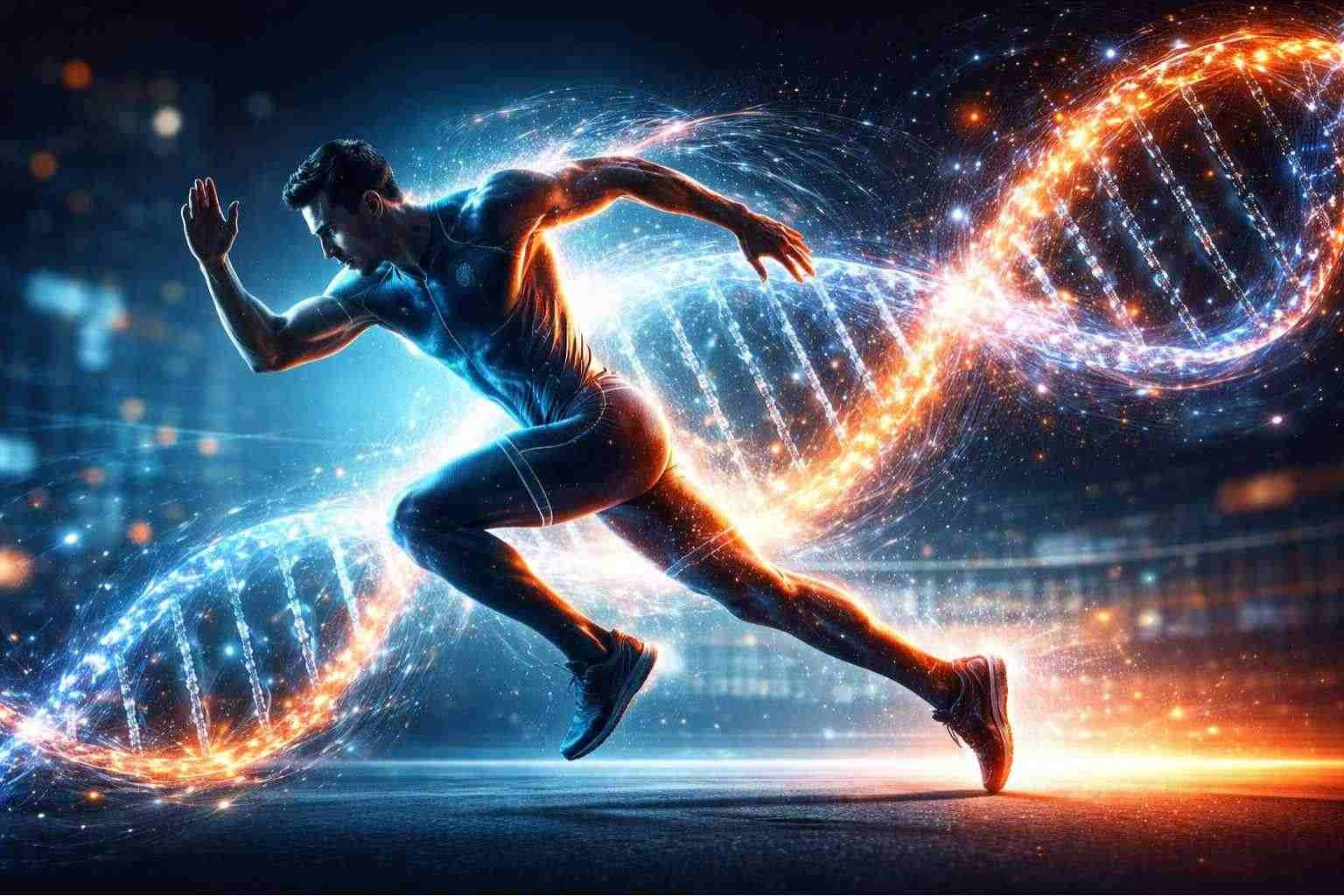
Top athletes look like they’re born with talent, but it takes more than that to succeed. Behind speed, strength and endurance is a complicated mix of training, mindset, environment and genetics. Genetics is also a key determinant of how the body responds to exercise, recovers from stress and adapts to competing at high levels. Genes don’t promise success, but they can certainly influence an athlete’s potential and what sport is best, in some cases.
1. Understanding Genetics in Sports
Genetics means what is inherited from the parents to children. In sports, these powers determine physical features such as one’s height, muscle make-up, lung volume and metabolism. These conditions inform how an athlete performs, trains and recovers through the years.
2. Why Some Athletes Progress More Quickly Than Others
There are any number of things around training that two athletes do and get very different outcomes. Genetics helps explain this difference. Some bodies respond better to training, gain muscle faster, or develop endurance more effectively. These are genetic gifts that some athletes have, which help vault them to an elite level of performance.
3. Muscle Fiber Types and Performance
Among the most investigated genetic polymorphisms in sports is muscle fiber type. There are different combinations of muscle fibers that athletes are born with which can effect their performance:
- Fast twitch fibres support both speed and power.
- Endurance and stamina is supported by slow twitch fibers
- Mixed fiber balance for rounder better athlete
- Fiber response affects fatigue resistance
- Training improves but does not convert fiber type
Sprinters and weightlifters typically have greater levels of fast twitch fibers, while marathon runners have more slow twitch fibers.
4. Genetics and Endurance Capacity
Long-distance sports have a high dependency on the delivery of oxygen and energy. Genetics plays a role in lung capacity, heart size and how effectively muscles use oxygen. These characteristics help to account for why some athletes are better at long distance running, cycling or swimming.
5. Strength, Power, and Body Structure
Genetics also plays a role in bone density, limb length, and joint structure. These characteristics have implications for the generation of leverage, balance, and force. For instance, longer limbs can help swimmers and strong bone structure is an advantage in power sports such as weightlifting.
6. Recovery and Injury Resistance
Another genetically determined aspect is recovery speed. Some athletes repair muscle damage quickly and do well when they cram in the heavy physical preparations. Genetics also contributes to the strength of tendons and the stability of joints, which in turn can affect the risk for injury over many years.
7. Mental Traits and Competitive Edge
Mental toughness isn’t just trained – it’s in your genes. Characteristics such as stress response, focus, motivation and control of emotion are to some extent inborn. This is what allows elite athletes to compete at a level where there is no room for errors.
8. DNA Testing in Modern Sports
Some teams and athletes are now testing their DNA to learn about their unique strengths and limits. Such information could be used to monitor the intensity of training and recovery strategies as well as injury risk minimization. The bar should always be genetics driven when it comes to training, not genetically capped.
9. Genetics and the Limits of Sports Success
Genes do not make champions. Most of those who received the favorable genes for such sports never make it to the top but some who don’t, do made. Key limitations include:
- Improperly trained and coached
- Poor nutrition and recovery habits
- Lack of access to services or assistance
- Low motivation or mental resilience
- Overreliance on genetic potential
Hard work is always a key regardless of who you’re ahead of on the genetic food chain.
10. How Training and Genetics Combine
The highest-level athletes are the product of good Genes and well-structured training, smart recovery strategies, and strong minds. Genetics takes you far, but training takes you farther more. When they are in concert, elite performance is achievable.
Key Takeaways
Genetics is an important factor in sports success for reasons such as strength, stamina and recovery factors, as well as mental aspects. Still, genes are not fate. Genetics dictate but they do not allow, training does as our discipline and environment. Elite performance is what happens when natural talent is combined with consistent hard work and optimal preparation.
FAQs:
Q1. Can genetics decide what sport you should play?
Genetics may imply strengths, but interest and training count every bit as much.
Q2. Are you born to be an elite athlete?
Both are built on natural gifts and enhanced through years of practice.
Q3. Can training overcome genetic limits?
Training can make a huge difference in performance even if genetics aren’t great.
Q4. Are athletes expected to have genetic testing?
No, it can be valuable but is not a necessity for success.
Q5. Do genetics affect injury risk?
Sure, genetics could affect how quickly you recover and even how easily you get injured.
