

Wireless charging for electric cars seems like something out of the future. You park your car, walk away and it charges itself without needing to plug in a cable. With EV adoption on the rise, automakers, cities and tech companies are taking notice. But is wireless EV charging a practical solution available for wide use, or is it more hype than reality? The truth, of course, lies in understanding how it does and doesn’t work, where it helps and where its limits are as of now.
1. What Wireless EV Charging Is Really
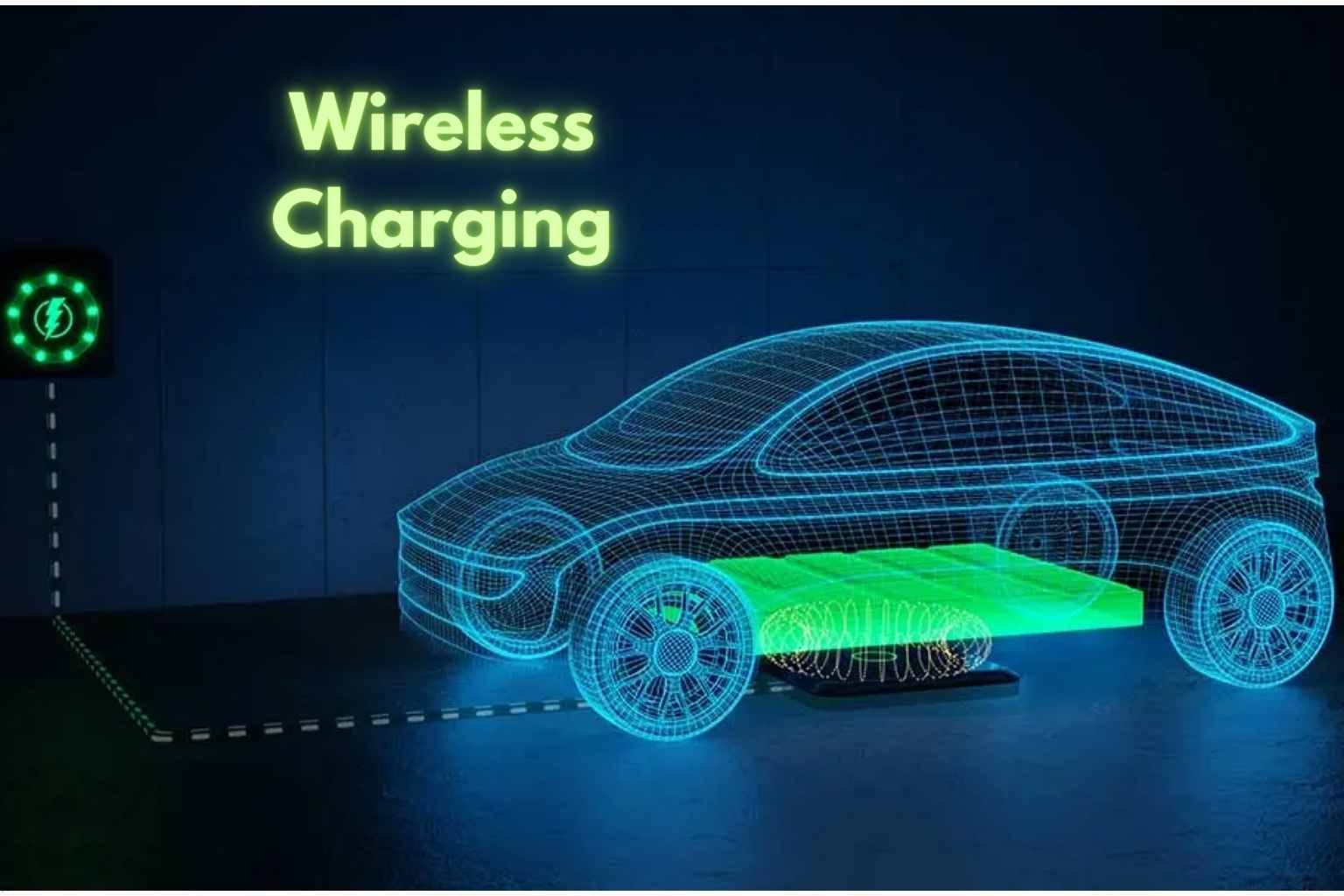
Wireless EV charging beams electromagnetic fields to pass electricity from a charging pad mounted on the ground and receiver coil embedded in the first row underbody of an electric vehicle. This technique, known as inductive charging, dispenses with the need to plug devices in. The car has to be positioned exactly over the pad for optimal transfer of power.
2. Why we want wireless charging so bad
Cables can be frustrating, particularly when the weather is bad, or for people with mobility issues. Wireless charging offers convenience, automation and less wear on connectors. For fleets, shared taxis and similar programs, eyes free charging could make the daily program a bit simpler.
3. In Layman’s Terms: How the Technology Works
The charging pad embedded in the ground is coupled to a power supply. When an EV with a supportive receiver parked above it, electricity is transferred wirelessly through the use of magnetic fields. Safety systems make sure that charging takes place only if the alignment is right and nothing between them.
4. Convenience vs Efficiency Debate
The convenience of wireless charging is its biggest advantage; efficiency, however, is a concern. Wireless charging systems get even less power to the battery than when charging with a cable, thanks to heat and spacing while wireless slow charging stations generally have maximum out of 7.5W lower for some Android chargers. Even if wireless charging is becoming more efficient, wired charging still gets power to most devices more efficiently in real-world situations.
5. Here’s Where Wireless EV Charging Makes Sense Now
Wireless charging is not designed to eliminate all charging solutions. It is most effective in some cases:
- Garages at home for daily overnight charging
- The ranks for cabs and ride sharing apps
- Bus stops and fleet depots
- Parking areas with frequent stops and starts
- Autonomous vehicle operations
These use cases favor ease of charging over speed
6. Dynamic Wireless Charging on Roads
Among the more exciting ideas is charging EVs while they drive. Road-embedded charging coils that energize vehicles in motion. Such a idea would help cut battery size requirements and alleviate range anxiety. Still, prohibitively high infrastructure costs and coordination problems makes all this an aspiration for the around next decade.
7. Cost and Infrastructure Challenges
Wireless charging solutions are also at a higher cost than corded affordability equivalents. Positioning requires ground support, alignment tools and suitable vehicles. The widespread deployment of this technology across multiple cities requires a large investment and standardisation, something that slows adoption.
8. Safety and Health Concerns Explained
Wireless EV charging is structured on a basis of safety code. Magnetic fields that are imposed are much lower than lethal. Systems turn themselves off if any objects or people get in the way. Healthwise, WECV is safe once it has been properly installed and used.
9. Is It Time To Enjoy Wireless Charging?
Wireless charging for now is real, but it has limitations. It works well in a controlled setting, but the costs, efficiency and vehicle compatibility are going to be hurdles to overcome for integration throughout the driving world. As technology evolves and costs drop we may not see an inflection point so much as steady marching forward.
10. The Real Story: Hypothetical or Hyperbole?
The hype is real on wireless charging for EVs, but by no stretch of the imagination a panacea. It’s great for convenience-oriented applications and the future of autonomous transportation. For most drivers, traditional plug in charging is still faster, cheaper and more convenient today.
Key Takeaways
Wireless EV charging is a real thing that actually exists and works, but it serves a purpose as opposed to serving everybody. It has a number of use-cases where it is much more convenient than anything else available, but it also suffers in both efficiency and cost. While wireless charging will have its place in evolving EV ecosystems, it’s unlikely to displace traditional charging altogether.
FAQs:
Q1. All electric cars work with wireless EV charging?
Only if the vehicles would have built-in or compatible receiver systems.
Q2. Is wireless slower than plug in charging?
Yes, for the most part it is a bit slower and less effective.
Q3. Is wireless charging of electric vehicles even safe for people?
Yes, there are high safety standards and no known health risks.
Q4. Do EVs have wireless charging while driving?
The technology has been piloted, but is not in general use.
Q5. Are cords a thing of the past with wireless charging?
It will more likely be used to supplement cable charging rather than replace it entirely.
